Safe fever management for children under 5
Fever is a common symptom in young children and is often caused by viral infections. Learn how to safely manage fever at home, recognize warning signs, and know when to seek medical care to protect children under 5 in Cambodia.
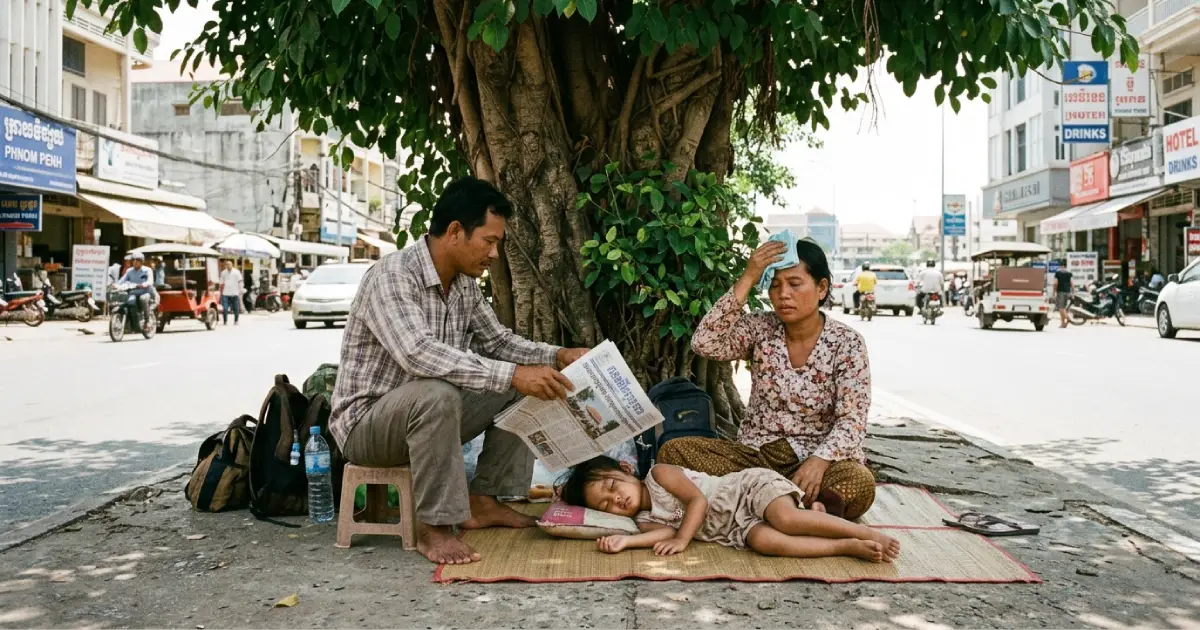
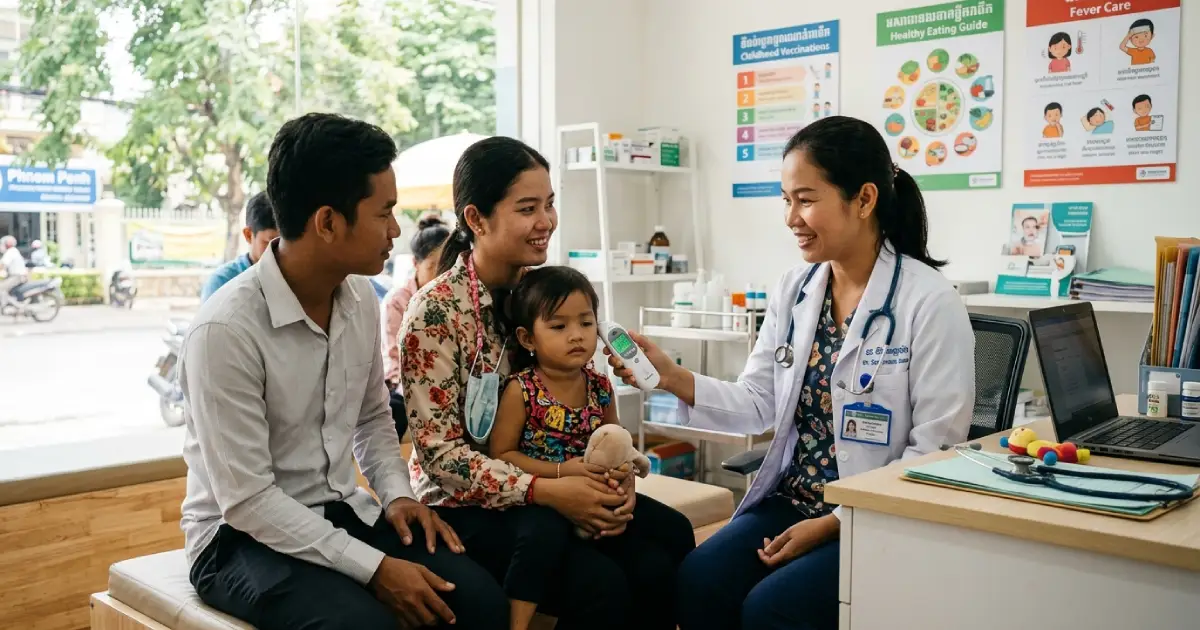
Fever is one of the most common reasons parents seek medical care for young children. Although seeing your child with a high temperature can be worrying, fever itself is usually a sign that the body’s immune system is fighting an infection.
Most fevers caused by common viral illnesses improve with supportive care. However, children under 5 years old require close observation because some infections can become serious if not treated promptly.
Understanding how to safely manage fever at home and recognizing when medical attention is needed can help parents make informed decisions and reduce unnecessary anxiety.
What Is Considered a Fever?
A child has a fever when their body temperature reaches:
- 38°C (100.4°F) or higher when measured with a digital thermometer.
Children can develop fever due to:
- Viral infections
- Bacterial infections
- Ear infections
- Influenza
- COVID-19
- Hand, Foot and Mouth Disease
- Dengue fever
- Pneumonia
- Urinary tract infections
The temperature itself does not always indicate how serious the illness is. A child’s overall condition is often more important than the number on the thermometer.
Stay updated on health & medicines in Cambodia
Join our community for health tips, medicine guides and more.
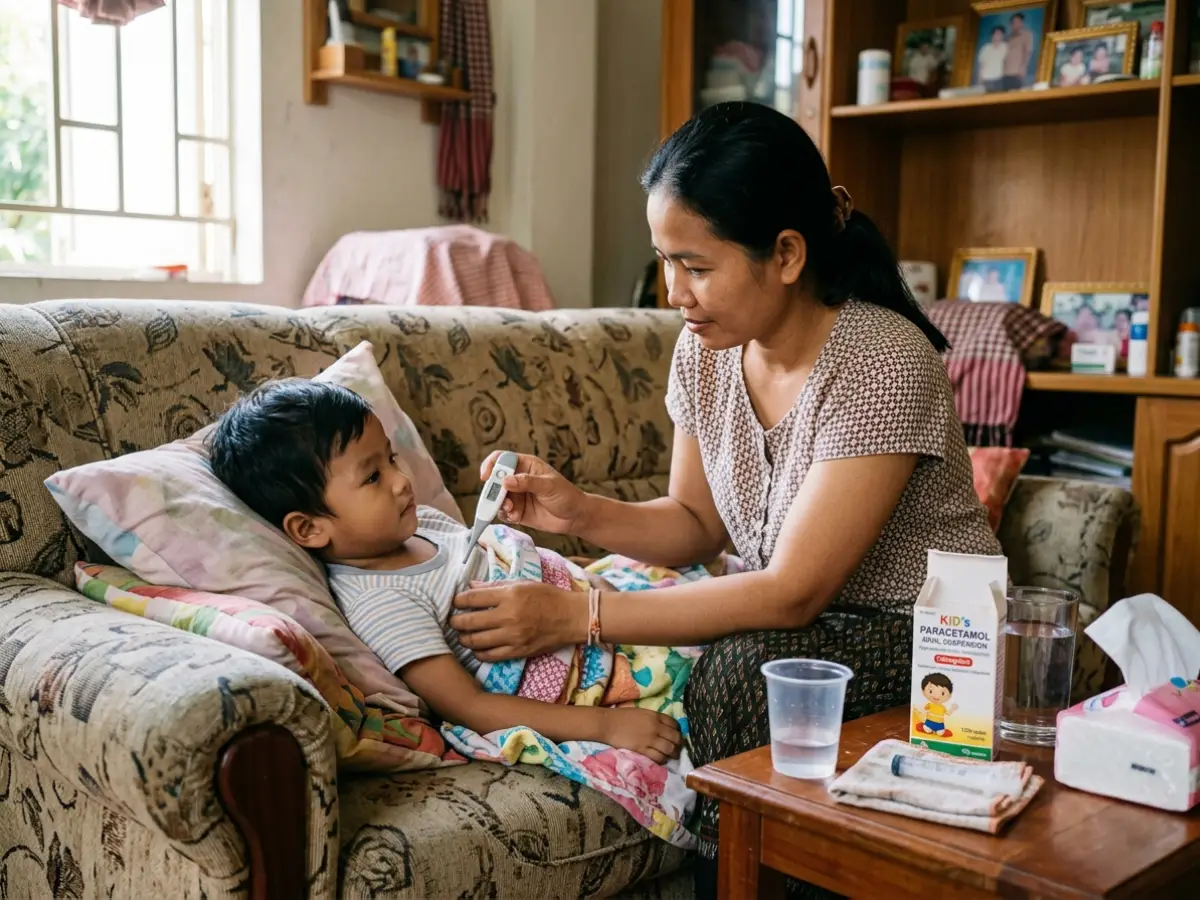
How to Measure Your Child’s Temperature Correctly
Use a digital thermometer for the most accurate reading.
For children under 5:
- Under 2 years: Follow your healthcare provider’s advice on the most appropriate measurement method.
- Older children: An armpit (axillary) measurement with a digital thermometer is commonly used and practical.
Avoid relying on touching the forehead with your hand, as this is not an accurate way to measure body temperature.
Safe Home Care for Fever
Most children with mild fever can be cared for safely at home.
Keep Your Child Hydrated
Fever increases fluid loss.
Offer:
- Water (for older infants and children)
- Breast milk
- Formula milk
- Oral rehydration solution if recommended
- Clear soups
Watch for signs of dehydration such as dry mouth, no tears when crying, or fewer wet diapers.
Dress Your Child Comfortably
Dress your child in light clothing.
Avoid:
- Thick blankets
- Heavy clothing
- Wrapping your child tightly
The goal is to keep your child comfortable rather than making them cold.
Let Your Child Rest
Children with fever often need extra sleep and quiet activities.
They do not have to stay in bed all day if they feel well enough to play gently.
Use Fever Medicine Safely
If your child is uncomfortable, a healthcare provider may recommend:
- Paracetamol (Acetaminophen)
- Ibuprofen (for children older than 6 months, if appropriate)
Always:
- Follow the correct dose based on your child’s weight.
- Use the measuring syringe or cup provided.
- Follow dosing instructions carefully.
Never give:
- Aspirin to children under 16 years due to the risk of Reye’s syndrome.
- Adult medications without medical advice.
What You Should NOT Do
Avoid common myths about treating fever.
Do NOT:
- Use ice baths.
- Rub alcohol on the child’s skin.
- Force your child to eat.
- Give antibiotics unless prescribed by a doctor.
- Alternate fever medicines unless specifically advised by a healthcare professional.
These practices may be ineffective or even harmful.
When Should You Seek Medical Care Immediately?
Take your child to a healthcare facility immediately if they have:
- Fever in an infant younger than 3 months
- Difficulty breathing
- Persistent vomiting
- Seizures or convulsions
- Extreme sleepiness or difficulty waking
- Severe dehydration
- Blue lips or skin
- Rash that does not fade when pressed
- Persistent crying that cannot be comforted
- Fever lasting more than 48–72 hours without improvement
- Signs of dengue, such as severe abdominal pain, persistent vomiting, unusual bleeding, or extreme weakness
Prompt evaluation can prevent serious complications.
Preventing Fever-Causing Illnesses
Many infections can be prevented by:
- Keeping childhood vaccinations up to date
- Frequent hand washing
- Drinking safe, clean water
- Eating properly cooked food
- Avoiding contact with sick individuals
- Protecting children from mosquito bites, especially during dengue season
Healthy habits reduce the risk of many common childhood illnesses.
Caring for Your Child During Recovery
Most viral fevers improve within a few days.
Continue to:
- Encourage fluids
- Offer small nutritious meals
- Monitor temperature if needed
- Watch for worsening symptoms
- Follow your doctor’s instructions
Your child should gradually return to normal activity after the fever has resolved and they are feeling well.
Frequently Asked Questions
This article is for general education purposes only and does not constitute medical advice. Always consult a qualified healthcare professional or pharmacist before making any health decisions.
Related articles