Heat Exhaustion vs Heatstroke — Knowing the Difference
Cambodia's heat can be deadly — but not all heat illnesses are the same. Heat exhaustion and heatstroke look similar at first, yet one is a medical emergency. A Phnom Penh-based healthcare professional explains the critical differences and what to do.

Why This Matters in Cambodia
Phnom Penh regularly records temperatures above 35°C between March and May, and the heat index — which factors in humidity — can push the felt temperature past 42°C. Every year, Cambodians suffer heat-related illness during Khmer New Year celebrations, outdoor work, and even short commutes on motorbikes.
As a general practitioner working in Phnom Penh, I see heat illness cases throughout the hot season. The single most important thing I want patients and families to understand is this: heat exhaustion and heatstroke are not the same. One can be managed at home with the right first aid. The other requires an emergency call to 119 immediately.
What Is Heat Exhaustion?
Heat exhaustion occurs when the body overheats and can no longer cool itself efficiently — usually after prolonged exposure to high temperatures combined with physical activity or inadequate fluid intake. The body is still trying to regulate itself, which is why the person is sweating heavily.
Recognising heat exhaustion:
- Heavy, excessive sweating
- Pale or clammy skin
- Fast, weak pulse
- Nausea or vomiting
- Muscle cramps or weakness
- Dizziness or light-headedness
- Headache
- Person remains conscious and coherent
Critically, the person with heat exhaustion is still alert. They may feel very unwell, but they can respond to you normally. Their core body temperature is elevated — typically between 37°C and 40°C — but has not yet crossed the dangerous threshold.
What Is Heatstroke?
Heatstroke is a life-threatening emergency. It occurs when the body's core temperature rises to 40°C or above and the brain and internal organs begin to fail. There are two types:
- Classic heatstroke: caused by exposure to extreme environmental heat, most commonly affecting elderly people, young children, and those with chronic illness.
- Exertional heatstroke: triggered by intense physical activity in the heat, more common in athletes, soldiers, and outdoor workers.
Warning signs of heatstroke:
- Core body temperature of 40°C or above
- Confusion, slurred speech, or irrational behaviour
- Loss of consciousness or unresponsiveness
- Hot, dry skin (sweating may stop)
- Rapid, strong pulse
- Seizures in severe cases
If a person becomes confused, stops sweating despite being hot, or loses consciousness — this is heatstroke. Every minute without treatment increases the risk of permanent brain damage or death.
Side-by-Side Comparison
Use this reference to quickly identify which condition you are dealing with:
| Heat Exhaustion | Heatstroke | |
| Consciousness | Alert, confused | Altered or unconscious |
| Skin | Pale, cold, sweaty | Hot, dry or flushed |
| Body Temp | Below 40°C | 40°C or above |
| Sweating | Heavy sweating | May stop sweating |
| Pulse | Rapid, weak | Rapid, strong |
| Nausea/Vomiting | Common | May occur |
| Action Required | Move to shade, cool down, hydrate | CALL 119 IMMEDIATELY |
What to Do: First Aid for Heat Exhaustion
If you suspect heat exhaustion, act quickly but stay calm — you have time to help this person before calling emergency services.
Step-by-step first aid:
- Move the person immediately to a cool, shaded area or air-conditioned room.
- Have them lie down and elevate their legs slightly to improve circulation.
- Remove excess clothing, especially heavy fabrics.
- Apply cool water to their skin — a wet cloth on the neck, armpits, and groin is especially effective.
- Fan them to encourage evaporative cooling.
- Give cool water or an oral rehydration solution (ORS) to drink if they are conscious and not vomiting.
- Monitor their condition closely. If they do not improve within 30 minutes, or if their condition worsens, call 119.
Stay updated on health & medicines in Cambodia
Join our community for health tips, medicine guides and more.
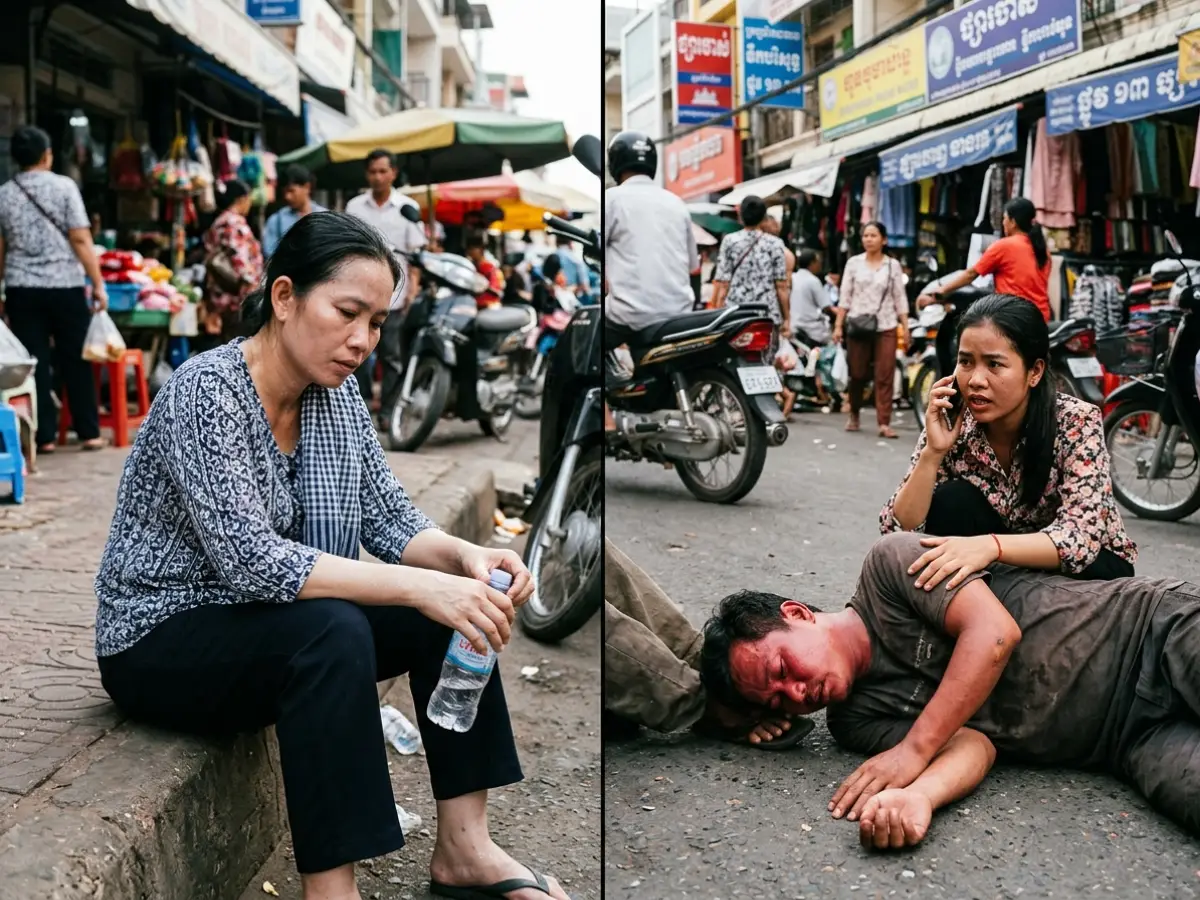
What to Do: Emergency Response for Heatstroke
Call 119 immediately. Do not wait.
While waiting for emergency services to arrive:
- Move the person to shade or a cool indoor area.
- Begin aggressive cooling at once: pour cold water over the body, apply ice packs to the neck, armpits, and groin.
- If the person is conscious and can swallow safely, offer small sips of water.
- Do not give aspirin or paracetamol — these medications do not lower body temperature in heatstroke and may worsen complications.
- Place an unconscious person in the recovery position (on their side) to prevent choking.
- Stay with them and keep cooling until emergency responders arrive.
Who Is Most at Risk in Cambodia?
Heat illness does not affect everyone equally. The following groups need extra protection during hot season:
- Outdoor workers: construction workers, tuk-tuk and moto-dop drivers, market vendors, and farmers.
- Elderly people: reduced ability to thermoregulate and often take medications that interfere with heat response.
- Young children: higher body surface area relative to body weight increases heat absorption.
- People with chronic conditions: diabetes, heart disease, kidney disease, and obesity all increase risk.
- Anyone who is dehydrated: even mild dehydration reduces the body's capacity to sweat and cool down.
Prevention: Staying Safe in Phnom Penh's Heat
- Stay hydrated: drink at least 2–3 litres of water per day; more if you are outdoors or physically active.
- Avoid the peak heat window between 11:00 am and 3:00 pm if you must be outside.
- Wear loose, light-coloured, breathable clothing.
- Use shade, fans, or air conditioning wherever available.
- Never leave children or elderly relatives in a parked vehicle, even briefly.
- Recognise the early warning signs in yourself and those around you and act before symptoms escalate.
Frequently Asked Questions
Key Takeways
✓ Heat exhaustion and heatstroke are different conditions requiring different responses.
✓ The key warning sign of heatstroke is confusion, unconsciousness, or a core temperature of 40°C or above — call 119 immediately.
✓ For heat exhaustion: move to shade, cool the body, rehydrate. Monitor for deterioration.
✓ Never give paracetamol or aspirin for heat illness — physical cooling is the correct treatment.
✓ Those most at risk in Cambodia include outdoor workers, the elderly, young children, and people with chronic health conditions.
✓ Prevention is always better than treatment: stay hydrated, avoid peak heat hours, and recognise early symptoms.
✓ Some medications increase heat sensitivity — consult a pharmacist if you are unsure about your medicines.
This article is for general education purposes only and does not constitute medical advice. Always consult a qualified healthcare professional or pharmacist before making any health decisions.